
Fairridge shares practical, down-to-earth guidance on uk countryside walks and outdoor living for readers across the UK.
- 0123456789
- Angle Bd Abdelmoumen & rue soumaya, Résidence
- [email protected]
Fairridge shares practical, down-to-earth guidance on uk countryside walks and outdoor living for readers across the UK.
 By Daniel Whitcombe
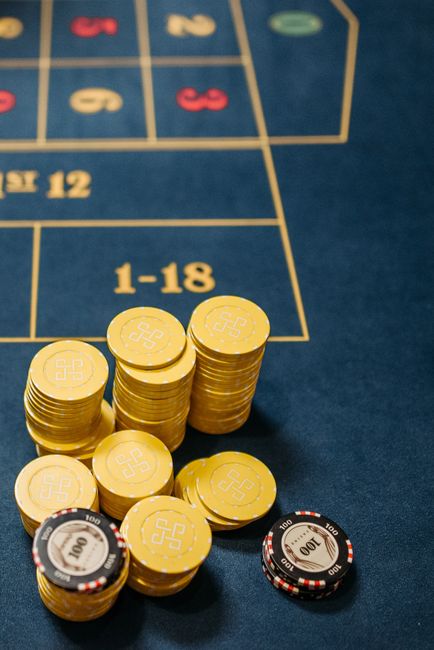
Every gambler has a friend who swears by a "hot" machine, or a story about a slot that paid out big at 3 a.m. because the casino "loosened it up." It's folklore, and it survives because the truth is less exciting — but far more useful. If you want to win more often over time, or at least lose more slowly, you need to understand a number that's printed in the fine print of every game: RTP.
RTP stands for Return to Player. It's the theoretical percentage of all money wagered on a game that gets paid back to players over millions of spins. A 96% RTP slot keeps 4% for the house, mathematically, in the long run. That last phrase does a lot of work, and it's where most players get tripped up.
Say you sit at a 96% RTP slot with $100. You are not entitled to get $96 back. You might get $0. You might get $500. RTP is a theoretical calculation across an almost infinite number of spins, not a budget you're owed. A slot with 96% RTP and high volatility could easily eat $200 in dead spins before a bonus round returns $800. The RTP was still accurate — you just experienced the variance, not the average.
This is why two players can have completely opposite opinions about the same game. One hit the feature twice in an hour; the other spun dry for 400 spins. Neither outcome contradicts the RTP. Most slots need millions of spins to converge on their published percentage, and you'll never play enough to see that convergence personally.
House edge is just 100% minus RTP. A 96% RTP slot has a 4% house edge. A 94% slot has 6%. Over one session, the difference feels like noise. Over a hundred sessions, it's the difference between a manageable bleed and a quick drain.
But here's the part casual players miss: RTP varies wildly by game type, not just by slot machine. Those comparing choices often turn to đánh đề online.
If your goal is maximizing play time, the game choice matters more than the machine. Two slots at 94% and 97% might look identical, but the 97% one gives you roughly a 50% longer expected session on the same bankroll.
RTP tells you the long-run average. Volatility tells you how bumpy the ride is. A low-volatility slot pays small, frequent wins — think classic three-reel fruit machines. A high-volatility slot pays rarely but potentially enormous — think Megaways titles and Megapays jackpots.
Here's the practical takeaway: if you have a $50 bankroll and want a two-hour session, playing a high-volatility slot with max bets is a recipe for busting in 20 minutes. Drop your bet size, or switch to a lower-volatility game. The RTP might be the same, but the shape of your session will be completely different.
Many casinos now publish volatility ratings — low, medium, high — right next to the RTP. Use them. They're a better predictor of your night than any hot/cold superstition.
Slots are pure chance. Poker and sports betting are different because a skilled player can actually move the needle.
In poker, the house takes a rake — typically 5% of the pot, capped at a few dollars in cash games. That rake is the casino's guaranteed cut. The question is whether your edge over the other players at the table exceeds the rake. At a soft $1/$2 table, a solid player might win 5–10 big blinds per hour. At a tough online table, the same player might break even after rake. Same game, wildly different outcomes.
Sports betting is similar but harsher for casual players. The standard vig is around -110 on each side of a spread, which translates to roughly a 4.5% hold for the book on a balanced two-way market. To beat that long-term, you need either genuine predictive skill or access to soft lines other bettors haven't spotted. Most recreational bettors do neither, and the house edge quietly grinds them down.
If you take nothing else from this article, take these:
One more thing about progressives: the jackpot contribution usually comes out of the RTP, which is why progressive slots often sit at 92–94% instead of 96%. You're trading base-game returns for a lottery ticket on top. That's a legitimate choice, but it's a choice, not a free upgrade.
The casino isn't rigged against you in the way conspiracy theorists claim. It doesn't need to be. The math is designed to win slowly, and it does, because players chase variance, ignore RTP, and pick games by mood rather than merit. Understanding RTP and volatility won't make you a professional, but it will make you a smarter player — one who loses less on bad nights and stretches good nights further.
Next time someone tells you a machine is "due," ask them what its RTP is. If they don't know, you already know more than they do.


We are not gonna make spamming
