
Fairridge shares practical, down-to-earth guidance on uk countryside walks and outdoor living for readers across the UK.
- 0123456789
- Angle Bd Abdelmoumen & rue soumaya, Résidence
- [email protected]
Fairridge shares practical, down-to-earth guidance on uk countryside walks and outdoor living for readers across the UK.
 By Charlotte Ainsworth
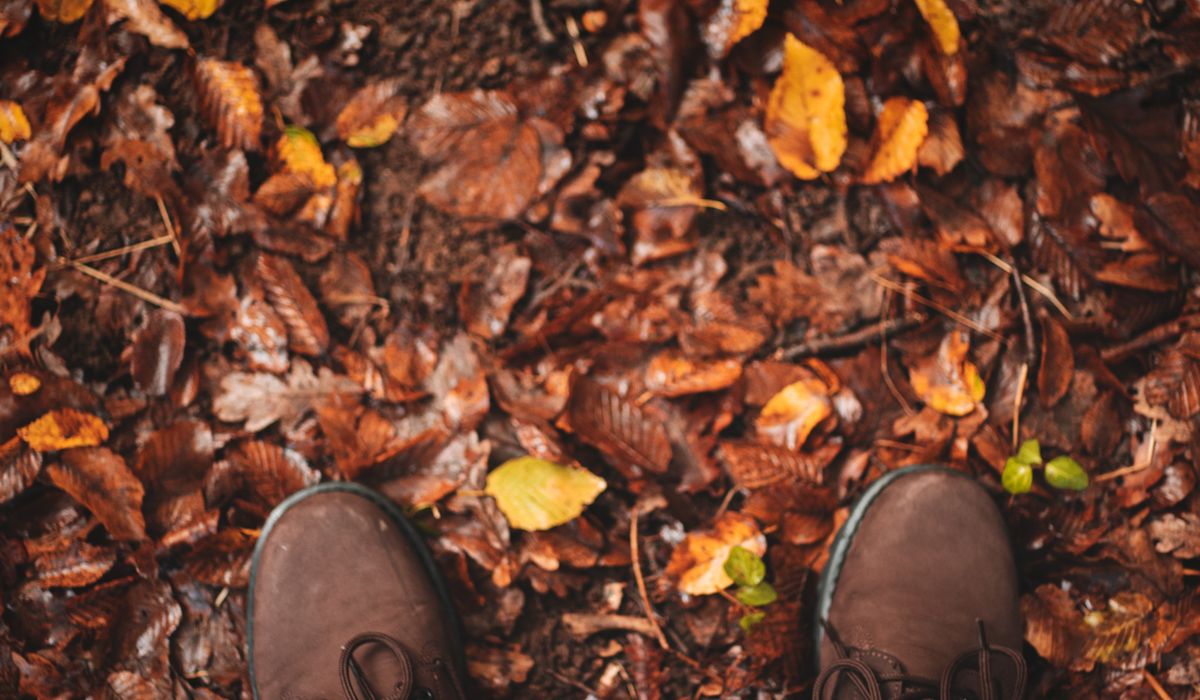
There's a moment on almost every country walk when the path narrows, the light drops, and you find yourself walking through a green tunnel of branches. Most of us walk through it without much thought. But once you know a handful of trees on sight, that tunnel becomes a conversation. You begin to notice where you are: the heavy clay soil suggested by oak and ash, the damp valley hinted at by willows, the old estate boundary marked out by a line of limes.
Tree identification is mostly pattern recognition, and the patterns are generous. You need three things: leaf shape, bud arrangement and bark texture. Get those three and you can name most of what you'll meet on a British footpath, in any season.
The oak is the one most people half-know already. Look for leaves with deep, rounded lobes — never pointed, never spiky — carried in loose clusters at the ends of twigs. The English or pedunculate oak hangs its acorns on long stalks; the sessile oak, more common in the wetter west and north, has stalkless acorns and leaves with a longer stalk. Both have grey-brown bark that becomes deeply fissured and ridged with age, often furred with moss on the northern side.
Ash is its opposite in almost every way. The leaves are pinnate — four to six pairs of leaflets arranged opposite each other along a central stem, with a single leaflet at the tip. The bark on young trees is smooth and grey, often showing a faint diamond pattern. The clincher comes in winter: ash has distinctive velvety black buds, sitting opposite each other on the twig. Nothing else in our hedgerows looks quite like them. You'll also see the bunches of winged seeds — the "keys" — hanging on well into winter. Sadly, ash dieback means many trees now stand stag-headed and pale, and you'll spot the difference between a healthy crown and a thinning one as you walk.
Beech is easy once you've touched it. The bark is smooth, pale grey and faintly wrinkled, like an elephant's skin, and often hosts a thin film of green algae. Its leaves are oval with a wavy, slightly hairy edge — run a finger along the margin of a young leaf and you'll feel the silk. In autumn they turn a rich copper, and on hedges the dead leaves often stay put right through winter, a habit called marcescence.
Sycamore gets a bad press from conservationists, but it's a fine tree to learn. The leaves are palmate — five broad lobes, deeply toothed, set opposite each other on the twig. Its seeds hang in pairs at a wide angle, the familiar helicopter wings. Older bark flakes off in dark, scaly plates. Don't confuse it with field maple, whose leaves are similar but much smaller with blunter, more rounded lobes, and whose winged seeds sit in a nearly straight line, often flushed with red.
In winter, work from the twig outwards. The single most useful question is whether the buds sit opposite each other or alternate along the stem. Ash, sycamore, field maple and horse chestnut are opposite. Oak, beech, birch, hazel and willow are alternate. That one check halves your options immediately.
Hedgerows are where tree identification earns its keep as local history. As a rough rule of thumb, the older the hedge, the more woody species it carries — something in the region of one extra species per century. A hedge of nothing but hawthorn is likely a Victorian or twentieth-century enclosure. Add hazel, field maple, dogwood and spindle, and you may be looking at a boundary laid out in the Tudor period, or even earlier.
Look too at the older trees left standing in the line. A pollarded oak or ash — its trunk swelling above head height where branches were repeatedly cut for fuel — points to wood pasture or a common that was once worked hard. A straight avenue of limes or sweet chestnuts usually means an estate. The trees tell you who owned the land and what they did with it.
Carry a small pocket guide, and photograph the same tree in spring, summer and winter. Learn two or three species properly each season rather than twenty badly. Check the ground beneath a tree as well as the canopy — acorn cups, beech husks, ash keys and hazel shells all confirm an identification at a glance. And take your time. The pleasure isn't only in the naming; it's in noticing that the wood has a different character from the one you walked through last week, and knowing why.


We are not gonna make spamming
